
HUGGY WUGGY
See the page summary ˅
- Description
- History
- Gameplay
-
Trivia
-
Museum
- Gallery
- Music & songs
- Posters
-
Merch
-
Quiz
-
Other
- Sources & references
- Navigation
- Comment


|
|
| Status | Alive |
| Family | The Wuggy Range |
| Gender | Male (He/Him) |
| Height | 18ft / 5.49m |
| Weight | 1,795lbs / 0.8 tn |
| Creator | Harley Sawyer |
| Leader | The Prototype |
|
|
| No | 1170 |
| Subject | ??? |
| Creation date |
Toy : 1984 Big body : 1990 |
|
|
| Enemies |
The Player (you) Poppy |
| Creator | Harley Sawyer |
| Leader | The Prototype |
|
|
| First apparition | Chapter 1 |
| Appears in |
Chapter 3 |
| Role | Antagonist |
|
|
| Voiced by |
Zachary Preciado Micah Preciado |
| VHS | ... |
| Trailers : | ... |
Description
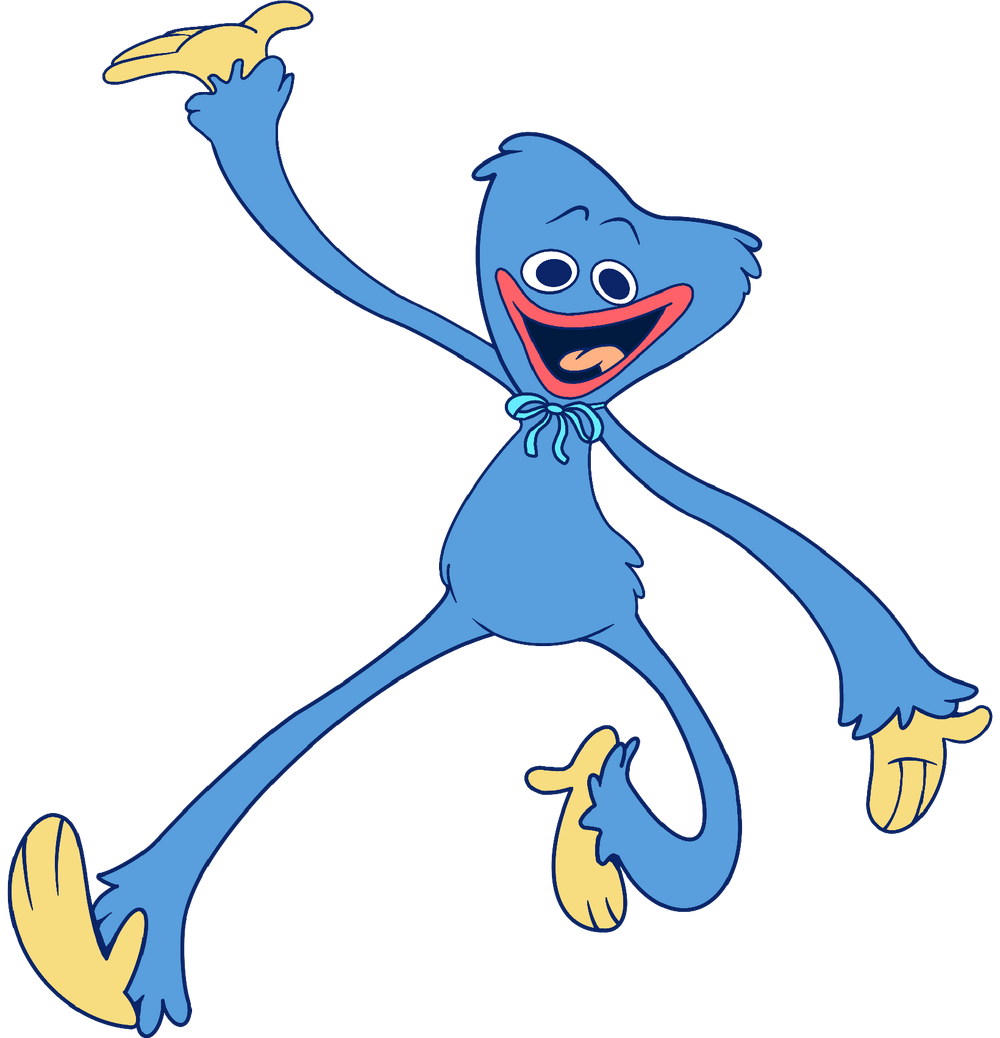
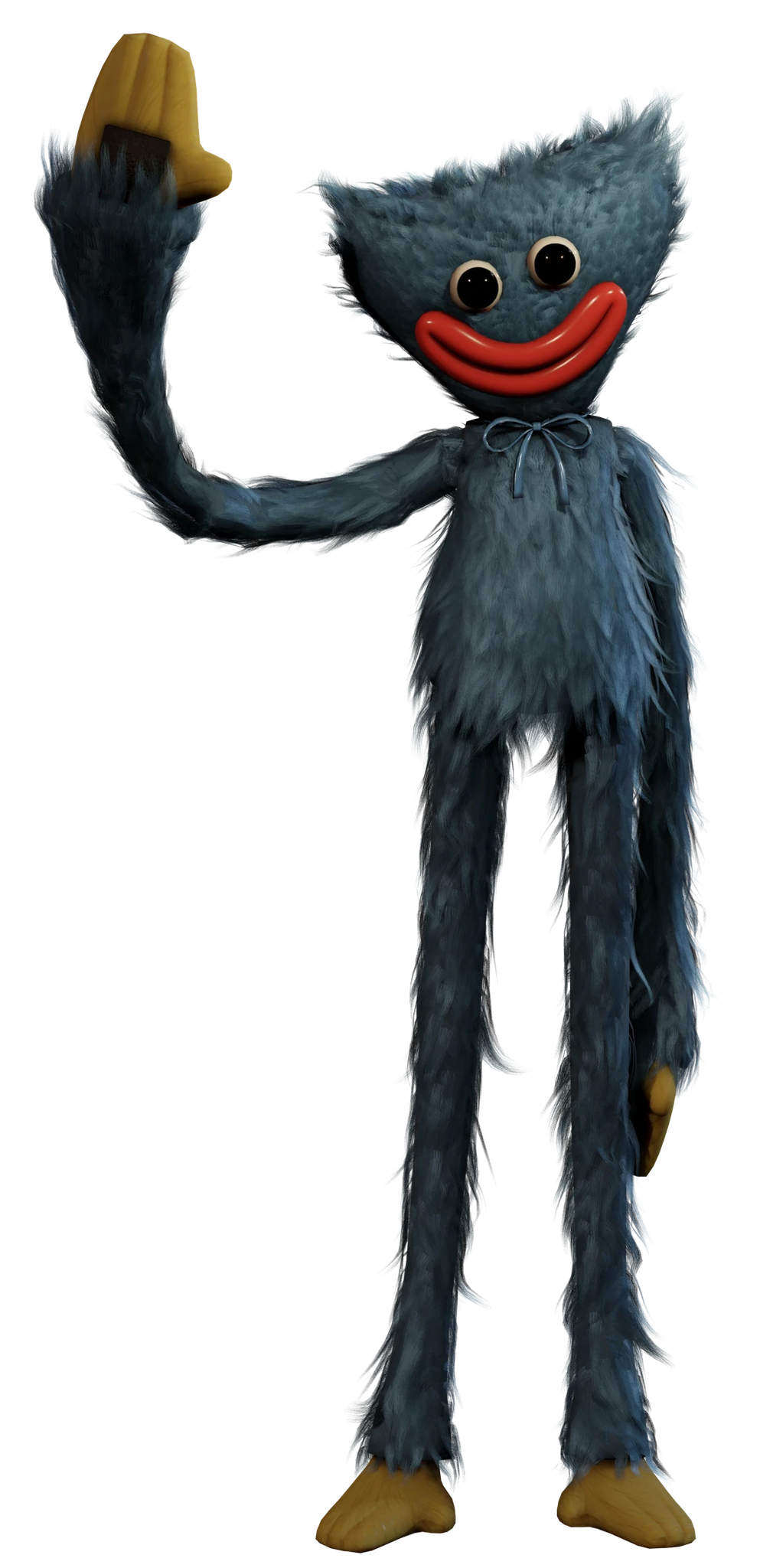
When first introduced in Poppy Playtime Chapter 1: A Tight Squeeze, Huggy Wuggy is presented as an oversized, tall and skinny blue-furred doll with long arms and legs, yellow hands, and opposable thumbs on his feet — a silhouette that reads as both toy-like and deeply uncanny.
He is one of the series' horror mascots. Originally created as a cuddly toy and mascot of the fictional company Playtime Co., he was later transformed into a monster through the Bigger Bodies program — specifically referenced in lore as (Experiment 1170). That origin (marketing charm turned scientific hubris) is central to how the character functions in the game: a familiar childhood figure twisted into an agent of dread.
Appearance :
-
Toy / mascot
As the factory’s beloved icon, this version is covered in the signature bright blue fur that makes him instantly recognizable. While his proportions remain unnaturally lanky with disproportionately long limbs, this iteration is designed to be soft and huggable.
His large yellow hands and feet feature four digit-like stitches fused and immobile. Notably, his palms are equipped with large Velcro patches—allowing him to embrace endlessly. His face bears the classic wide, red-lipped grin and dilated, doll-like eyes.
-
Bigger Body (EXP1170)
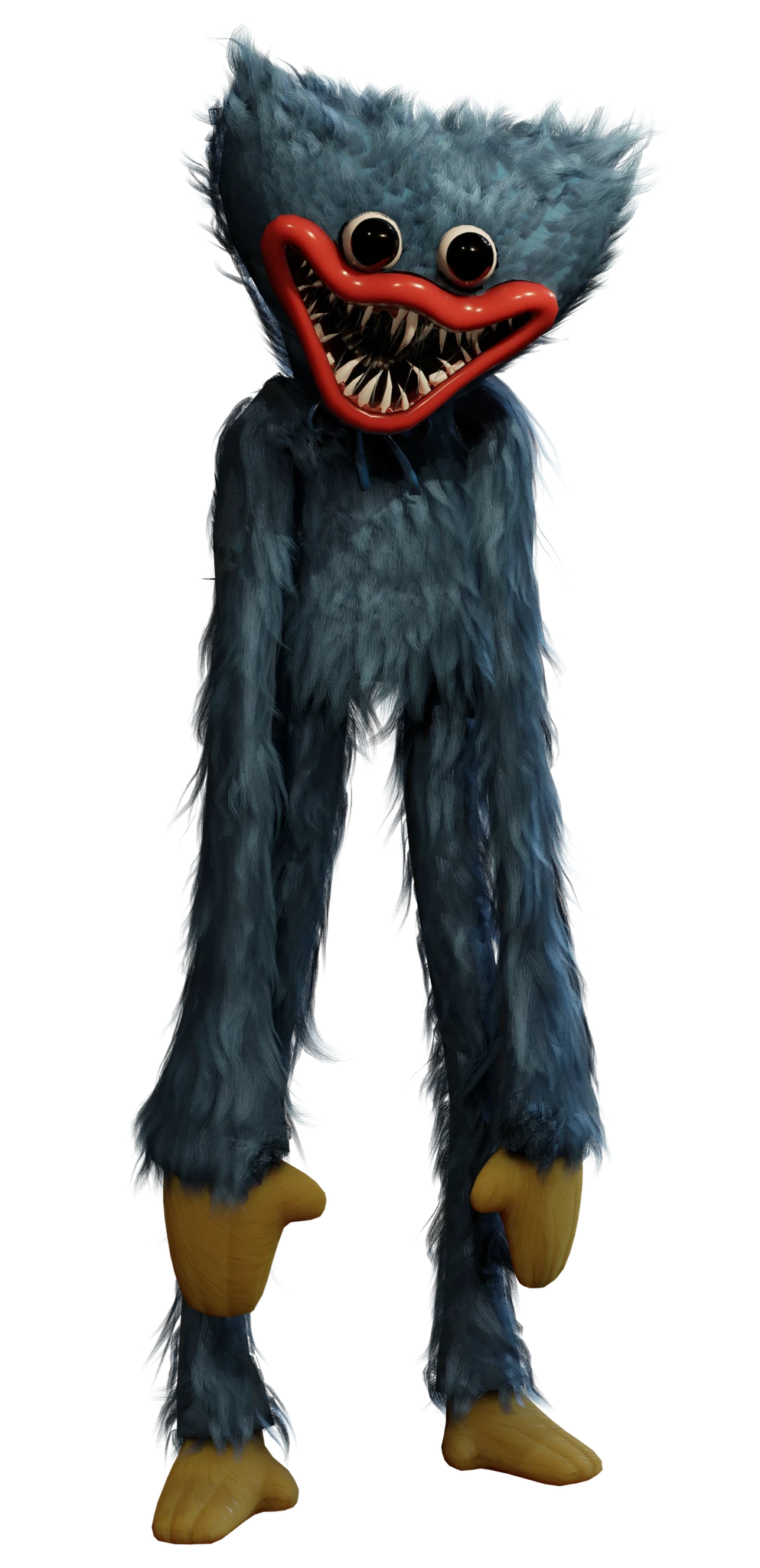
Standing at 18 feet tall, this biological version mimics the toy's lanky build but with functioning anatomy. The eyes are permanently dilated, giving a deranged look. The mouth contains rows of jagged, razor-sharp teeth and a secondary set of jaws located in the throat.
-
Nightmare Huggy
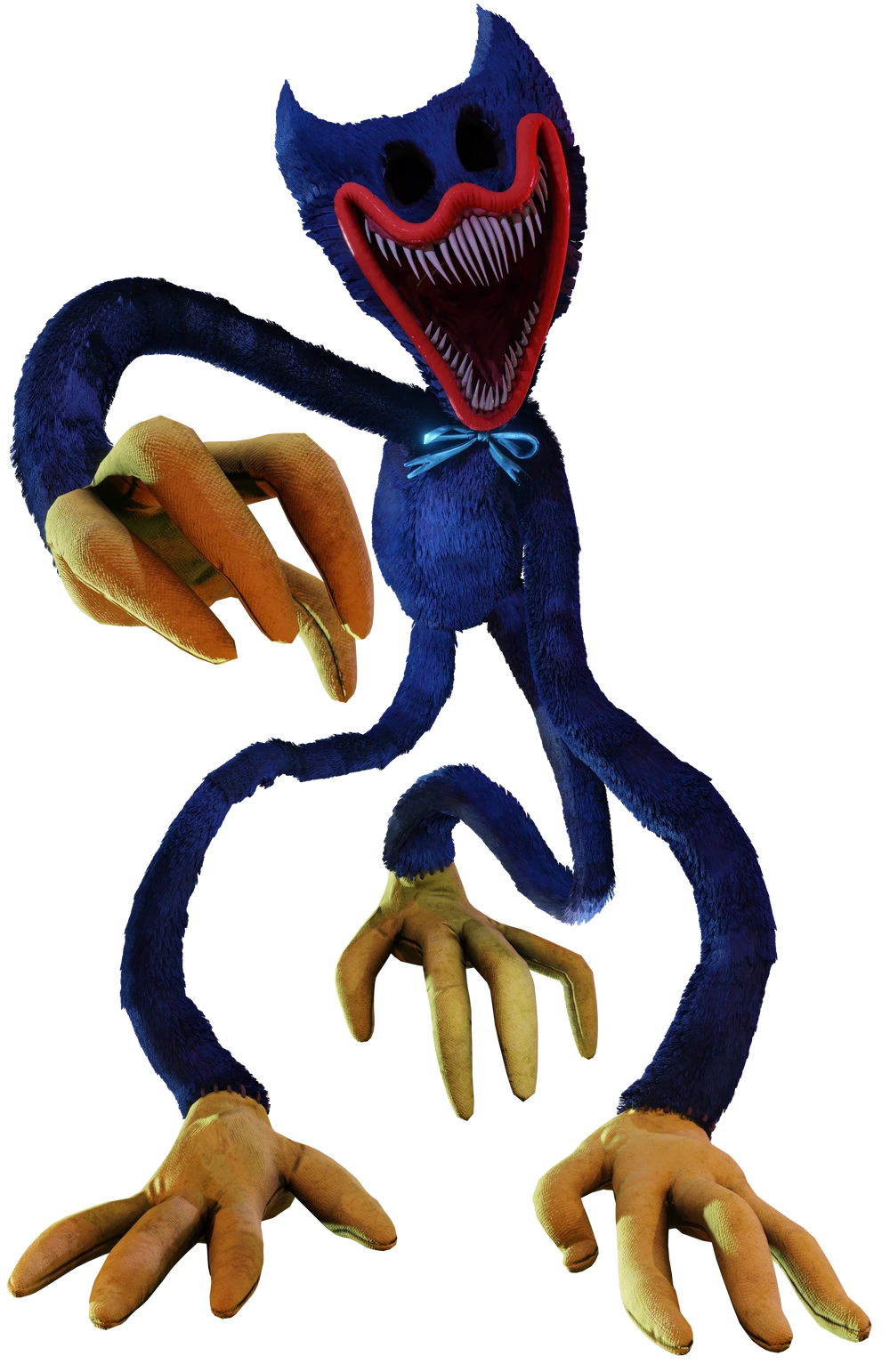
This Huggy form is a distorted hallucination with significantly darker blue fur. The head shape is skewed, featuring devilish horns on top. The eyes are replaced by two empty black sockets. The mouth is elongated with longer, thinner teeth (lacking the secondary jaw). The hands and feet have lost their rounded shape, replaced by splayed, elongated fingers and toes that resemble claws.
-
Destroy (Chapter 4)
In this form, he exhibits severe physical trauma. A large portion of the left side of his head is missing, and the lower left arm is completely severed. Torn patches of fur reveal an internal structure of stitched rope rather than bone. Thin white bandages are wrapped around his chest, right arm, and left leg. The blue bowtie is tied around the stump of his left arm.
Personality :
Surface persona: By design, Huggy Wuggy’s concept is that of the perfect companion: friendly, and comforting — a toy you would expect to hug. This manufactured friendliness is why his presence is so disturbing when it collapses into violence. According to Log 08502, even his Bigger Body counterpart was noted to be "obedient" and sufficiently intelligent to serve as a security guard, provided no aggression was directed towards him.
Behavioural traits: In practice within the games, Huggy displays a relentless, single-minded predatory drive. History shows this volatility: on June 18, 1992, he went on a rampage after being attacked with darts. When The Player returns in 2005, Huggy resumes his task to surveil and protect the factory. He rarely speaks; instead, his personality is revealed through movement and methodical pursuit, stalking The Player with a stealthy approach before attempting a lethal embrace.
Psychological impact: Huggy functions less as a nuanced character and more as a symbol — an inversion of innocence. His “personality” is intentionally thin on dialogue but heavy on implication: loyalty to his original design, warped by experimentation. However, by Chapter 4, this shifts towards personal vengeance; upon meeting The Player again, he furiously pounds on the door and roars, absolutely infuriated by his previous defeat. That tension — toy logic applied without empathy — is central to the horror he represents.
History
Within the fictional timeline of Poppy Playtime, Huggy Wuggy’s origins trace back to the peak of Playtime Co., the once-beloved toy manufacturing giant. Marketed as the company’s flagship creation and “the perfect friend”, Huggy was the centerpiece of the corporation’s success before its eventual downfall. He was part of the company’s ambitious Bigger Bodies Initiative — an experimental project that aimed to turn lifeless toys into sentient beings. The result, however, was far from what the designers intended: the beloved mascot became an apex predator lurking within the factory’s ruins.
Canonical documents, such as VHS recordings and staff memos, reveal that Huggy Wuggy’s creation was catalogued as Experiment 1170. Though originally designed to obey, the experiment displayed violent and unpredictable behavior. These abnormalities were covered up internally, and production continued, leading directly to the catastrophic events later known as the Hour of Joy.
Backstory :
Huggy’s backstory unfolds through environmental storytelling: scattered audio tapes, destroyed labs, and factory documents suggest that Playtime Co. researchers sought to create toys capable of forming real emotional bonds. The Bigger Bodies program was the company’s solution — transferring human consciousness or essence into toy forms. Over time, these sentient toys began exhibiting emotions, aggression, and independent thought. Huggy was among the first “successes,” combining intelligence, obedience, and near-superhuman strength.
However, this success came at a cost. The human elements integrated into Huggy corrupted his design, producing a conflicted creature bound by programming yet driven by instinct. His loyalty to Playtime Co. remained, but devoid of empathy, it turned mechanical and ruthless. Some theories suggest Huggy retains fragmented memories of his human origin — explaining his erratic behavior and occasional restraint before killing.
Hour of Joy :
The Hour of Joy marks one of the darkest moments in Poppy Playtime lore. It was a massive uprising within the Playtime Co. facility where multiple “Bigger Bodies” experiments, including Huggy Wuggy, turned violently against the staff. Footage from internal VHS logs shows chaos — screams, alarms, and the sounds of heavy footsteps echoing through factory halls. Huggy’s participation in the event is heavily implied, and his bloodstained fur and damaged model seen later in the game serve as grim reminders of that massacre.
The motives behind the uprising remain ambiguous. Some interpret it as a collective revolt of tortured souls trapped in toy bodies, while others believe it was orchestrated by a higher entity — possibly the mysterious Prototype, a recurring figure in later chapters. The Hour of Joy effectively ended Playtime Co.’s operations, leaving the factory sealed and abandoned.
Chapters :
-
Chapter 1: A Tight Squeeze
Huggy Wuggy first appears as a harmless statue greeting visitors in the factory’s main lobby. After a sudden power outage, he disappears — only to reappear as a relentless predator stalking the player through dark corridors and air vents. This first encounter defines his terrifying nature and sets the tone for the series’ blend of childhood nostalgia and pure horror.
-
Chapter 2: Fly in a Web
Though Huggy Wuggy does not take an active role in this chapter, his influence lingers. Posters, factory murals, and eerie background references remind players of his existence and legacy within Playtime Co. His absence becomes a form of tension — proof that he may still be alive somewhere within the complex.
-
Chapter 3: Deep Sleep
Huggy returns as a haunting presence — not always physically, but through hallucinations and memories triggered by the chapter’s red gas mechanics. His shadowy appearances are designed to disorient the player, merging psychological fear with lingering trauma.
-
Chapter 4: Safe Haven
Surviving previous events, Huggy reemerges as part of the factory’s larger mystery. His endurance hints at something beyond a simple toy gone rogue — perhaps a conscious being tied to the Prototype’s network. Chapter 4 deepens his lore by connecting him to other failed experiments and survivors.
-
Chapter 5
Although official details remain scarce, teaser materials for Chapter 5 confirm Huggy Wuggy’s continued importance to the story. Whether as a physical adversary or a symbolic force, he remains the heart of Playtime Co.’s tragic narrative — the face of both its success and downfall.
Project: Playtime :
In the multiplayer spinoff PROJECT: PLAYTIME, Huggy Wuggy becomes a playable monster. His characteristics are reinterpreted for asymmetrical multiplayer gameplay — combining high speed, long reach, and ambush tactics. Players controlling Huggy must locate and eliminate survivors while using miniature Huggies as sentinels to track movement across the map. This adaptation reframes him from a scripted horror entity into a strategic, player-controlled predator.
Despite the mechanical changes, the developers maintained his signature traits: the eerie smile, childlike jingles, and sudden lunges that mirror his chase in Chapter 1. Project: Playtime thereby preserves Huggy’s legacy as both a nostalgic mascot and an icon of fear.
VHS – The Escape :
Throughout the series, VHS tapes play a crucial role in revealing the hidden story of Playtime Co. One of the most significant is The Escape Tape, which allegedly shows fragments of Huggy’s containment failure. The footage is chaotic and grainy — brief glimpses of security halls, alarms, and a massive blue figure moving through the dark. Whether the tape represents Huggy’s initial breakout or a later attempt to flee the facility remains deliberately ambiguous.
These tapes are designed to blend corporate propaganda with horror. Playtime Co.’s cheerful jingles and childlike branding suddenly cut to footage of terror, creating one of the most effective storytelling contrasts in modern indie horror. The VHS aesthetic underscores the game’s nostalgic yet corrupted tone.
Gameplay
In Poppy Playtime, Huggy Wuggy plays a pivotal role in defining the horror and tension mechanics of the game. His design and movement pattern are deliberately unpredictable, combining stealth, chase sequences, and jump scares to maximize fear. The player, equipped only with a GrabPack, must solve puzzles, restore power, and survive encounters against Huggy in narrow industrial corridors. His gameplay purpose is to embody the concept of a once-friendly toy turned predator — turning the factory, once a playground, into a labyrinth of terror.
Huggy’s presence influences every core gameplay element: sound design, lighting, level pacing, and environmental clues. Even when he’s not visible, subtle cues — distant footsteps, blue fur, or echoing growls — maintain a constant feeling of dread. This makes him one of the most effective and memorable antagonists in recent indie horror gaming.
Chapters :
-
Chapter 1: A Tight Squeeze
Huggy Wuggy’s gameplay debut in Chapter 1 is an iconic chase sequence through the factory’s ventilation system. The player must react quickly, using the GrabPack to open doors and escape narrow corridors while Huggy pursues relentlessly. His movement is dynamic and partially AI-driven, forcing players to memorize escape paths while managing fear and adrenaline. The chapter ends with Huggy falling into the abyss — a moment that feels conclusive but subtly hints at his survival.
-
Chapter 3: Deep Sleep
While Huggy Wuggy is not physically encountered, his gameplay impact returns through hallucinations and audio scares. Players experience sequences where shadows or silhouettes resembling Huggy appear briefly, combined with distorted audio of his previous chase theme. These illusions manipulate player expectations — suggesting Huggy is never truly gone, even when unseen.
-
Chapter 4: Safe Haven
In this chapter, Huggy’s presence becomes psychological. The player must navigate areas where Huggy’s prototypes and failed replicas are displayed, and sudden movements among them can trigger panic. Scripted sequences simulate Huggy’s possible return, reinforcing his mythic status within the factory’s lore.
-
Chapter 5
Although details about Chapter 5 remain speculative, early teasers suggest Huggy may return as a fully sentient antagonist, potentially merging his AI aggression with emotional intelligence. Gameplay is expected to evolve toward a cat-and-mouse dynamic, combining chase horror with dialogue-driven storytelling.
Project: Playtime :
In Project: Playtime, Huggy Wuggy’s gameplay is transformed into a multiplayer format where he serves as one of the main “Monsters.” Players controlling Huggy must hunt down and eliminate Survivors before they can assemble a toy to win the round. Huggy’s signature traits — his long arms and predatory movement — are translated into gameplay mechanics allowing him to climb walls, hide in dark spaces, and deploy small Mini Huggies that act as motion detectors.
His playstyle is defined by speed and awareness: Huggy is best used by players who prefer stealth and sudden ambushes. His ability to sense vibrations and faint movements gives him an edge in narrow environments, maintaining the same level of tension and dread seen in the main series.
Abilities :
- Enhanced Agility: Huggy’s elongated limbs allow him to move swiftly through vents and tight spaces where players cannot follow.
- Wall Climbing: In Project: Playtime, he can scale vertical surfaces and ceilings, ambushing players from unexpected angles.
- Acute Hearing: Huggy can detect sound vibrations from long distances, compensating for limited vision in dark environments.
- Mini Huggies Deployment: Small versions of himself can be placed as traps, alerting him when players pass nearby.
- Silent Movement: Despite his large size, Huggy moves almost silently until he strikes, amplifying his fear factor.
- Durability: He can endure physical damage and environmental hazards that would destroy lesser creatures.
These abilities, combined with his eerie presence, make Huggy Wuggy a near-perfect predator — a symbol of twisted innocence and corrupted creation. His gameplay role across all versions of Poppy Playtime ensures that he remains a core figure of fear, fascination, and tragic power.
Trivia
Huggy Wuggy has become one of the most iconic figures of Poppy Playtime, inspiring both fan creations and real-world merchandise. Beyond his in-game role, there are numerous fun and curious facts that contribute to his enduring popularity:
- Memorable Song: His catchy nursery-style song has gone viral online, creating memes and fan videos that contrast the cheerful tone with his terrifying appearance.
- Model Height Variations: In single-player chapters, Huggy is around 18 ft tall, whereas in Project: Playtime multiplayer he is roughly 10 ft — scaled to fit gameplay mechanics.
- Merchandising Controversy: Early unofficial plushes and toys generated safety concerns and, in some regions, warnings about exposure to children due to the scary nature of the character.
- Fan Interpretations: Fans often speculate about Huggy’s human or sentient aspects, leading to extensive lore theories and roleplay content.
- Easter Eggs: Huggy appears subtly in other chapters via posters, shadows, or hallucinations, even when he is not actively chasing the player.
- Pop Culture Presence: The character has inspired crossover memes, Halloween costumes, and fan art, reinforcing his cultural footprint beyond the game itself.
These trivia points highlight Huggy Wuggy’s duality as a symbol of both nostalgia and horror, a character designed to be loved and feared at the same time.
Quiz!
Test your Heart Hugger knowledge with this quiz! (All the answers to your questions are on the page)
You can try again as long as you don't have all the correct answers.
Museum
Below you will find a list of numerous visual, video, audio, and merchandise resources... about Lily Lovebraids
Gallery :
Sources
*some of the information in the "Monster Spawning System" section comes from the following sources:
- Huggy Wuggy - Poppy Playtime Wiki - Fandom
- Playtime Co./History | Poppy Playtime Wiki - Fandom
- Poppy Playtime - Wikipedia
- Safe Haven | Poppy Playtime Wiki - Fandom
- Huggy Wuggy - Villains Wiki - Fandom
- Huggy Wuggy - Mob Wiki - Fandom
- Chapter 5 Teaser Trailer - Poppy Playtime Wiki - Fandom
- Poppy Playtime Theories Playlist - The Game Theorists - YouTube
- Poppy Playtime: All Chapters Full Gameplay Playthrough (Full Game) 1,2,3,4 - Minuthu - YouTube
- Real Huggy Wuggy Origin - VickyFilm - YouTube
- MEET the NEW Poppy Playtime CHAPTER 5 CHARACTERS! - Razzbowski - YouTube
- Chapter 5's First Trailer Is INSANE... - Sheeprampage - YouTube
- Poppy Playtime: The Great Escape - facelessbookblog
- "What really happened in the final VHS tape of Chapter 1" - Reddit
- Huggy Wuggy - Fiction Wiki
*please note that the other parts of this page were created using our knowledge of the game — even though the structure may be similar to that of other websites.